



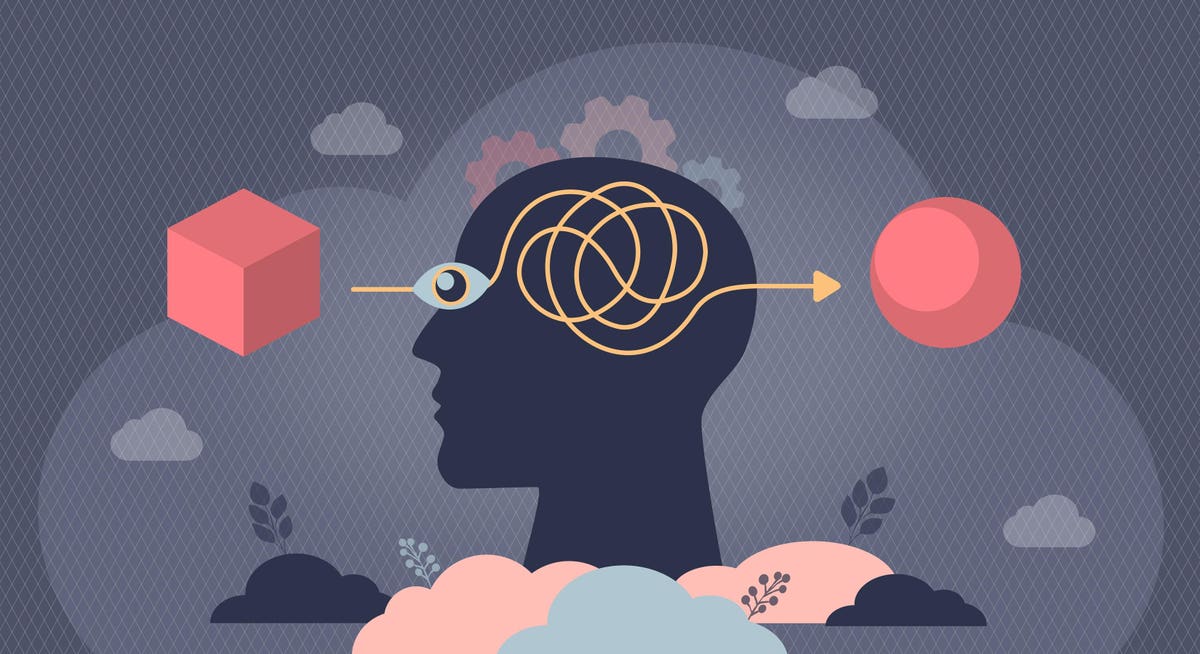
There is a significant amount of discussion around bias in the workplace, and rightfully so, as 39 percent of employees report experiencing frequent biases in their work environment. Interestingly, alongside these conversations surrounding workplace bias, there exists a set of commonly-held biases about bias itself.
This article breaks down six examples of these biases about bias.
1. All biases are bad
The term ‘bias’ often carries negative connotations, leading people to adamantly deny the existence of their own biases. While it is true that biases can manifest as harmful prejudices, biases also play a crucial role in how we process information. Our sensory system receives an overwhelming 11 million bits of information per second, yet our conscious brains can only process around 50 bits per second. This information compression inevitably gives rise to cognitive biases, as individuals construct their own subjective reality based on their perception of incoming information.
Of course, recognizing that everyone is biased does not provide an excuse for discrimination and unfair treatment. Instead, it serves as a reminder to always be actively recognizing and challenging these harmful biases.
2. Biases are based on observed behaviors
People often subscribe to the notion that biases stem from generalized behaviors exhibited by the group experiencing the bias. However, this tendency to blame the victims is often grounded in false assumptions.
A recent example that challenges this belief is the examination of gender pay inequality. It is commonly believed that women earn less due to their alleged reluctance to negotiate or ask for what they want. However, recent research conducted by Laura Kray, Jessica Kennedy, and Margaret Lee debunks this underlying belief. Their findings revealed that 54 percent of women reported negotiating their job offers, compared to 44 percent of men.
Similarly, several studies have refuted the premise that ageism exists due to a deficit in productivity, adaptability, and reliability of older workers.
3. Biases are about someone else
People often hold the misconception that biases are solely about others, and fail to recognize their existence within themselves. However, this belief overlooks the concept of internalized oppression, wherein marginalized groups adopt biased views and internalize negative stereotypes about their own identities.
Internalized biases can manifest in various ways, including self-doubt, lower self-esteem and limiting beliefs about one’s own capabilities. These biases may hinder people from fully realizing their potential and can perpetuate a cycle of self-limitation.
It is important that efforts to dismantle biases not only focus on those that people hold against others, but also examine the biases they internalize towards their own identities.
4. Pretending not to see differences alleviates biases
Some people believe that they can avoid biases by ignoring the differences in people’s identities. They say things like “I don’t see color,” as though not acknowledging differences allows them to avoid discrimination and prejudice. However, research has shown that this colorblind approach can actually perpetuate systemic inequalities by ignoring the unique barriers faced by marginalized groups.
Rather than taking a colorblind approach, embracing multiculturalism has been proven to be a much more effective at reducing biases. Multiculturalism involves both acknowledging and celebrating racial differences, promoting a deeper understanding and appreciation of different cultures and identities.
5. Diversity & meritocracy are at odds with each other
There is a belief, often held by individuals with dominant identities, that diversity initiatives are inherently biased, as they are perceived to be at odds with the principles of meritocracy. They argue that considering factors beyond merit will compromise the quality and fairness of decision-making processes.
However, research consistently shows that diverse teams and organizations outperform homogeneous ones. A McKinsey study found that companies with more diverse executive teams are more likely to achieve above-average profitability. Another study published in the Harvard Business Review revealed that diverse teams are more innovative, problem-solve more effectively, and make better decisions compared to homogeneous teams.
The notion that diversity initiatives undermine meritocracy is based on a flawed understanding of merit. Merit should be evaluated in a broader context that recognizes the diverse talents, perspectives, and experiences individuals can bring to the table. Embracing diversity does not mean sacrificing merit; it means expanding the criteria to consider a wider range of qualifications and competencies.
6. Bias training helps
While bias training has become a popular tool in many organizations’ diversity and inclusion initiatives, there is a growing realization that its impact on reducing biases often falls short of expectations. According to a study published in the Harvard Business Review, 87 percent of respondents reported that bias training at their firms primarily focused on explaining the science behind bias and the costs of discrimination in organizations, and only 10 percent of training programs provided attendees with strategies and actionable methods for reducing bias.
It is important to raise awareness about the existence and consequences of biases, but one-off training sessions that simply provide a theoretical understanding of biases are not sufficient to create meaningful change. To truly address biases, organizations must go beyond the theoretical and equip their employees with practical strategies to recognize, challenge, and mitigate biases in their everyday decision-making.
While many biases are unconscious, the work to combat them needs to be conscious and intentional. That includes examining biases about biases themselves.
Read the full article here