



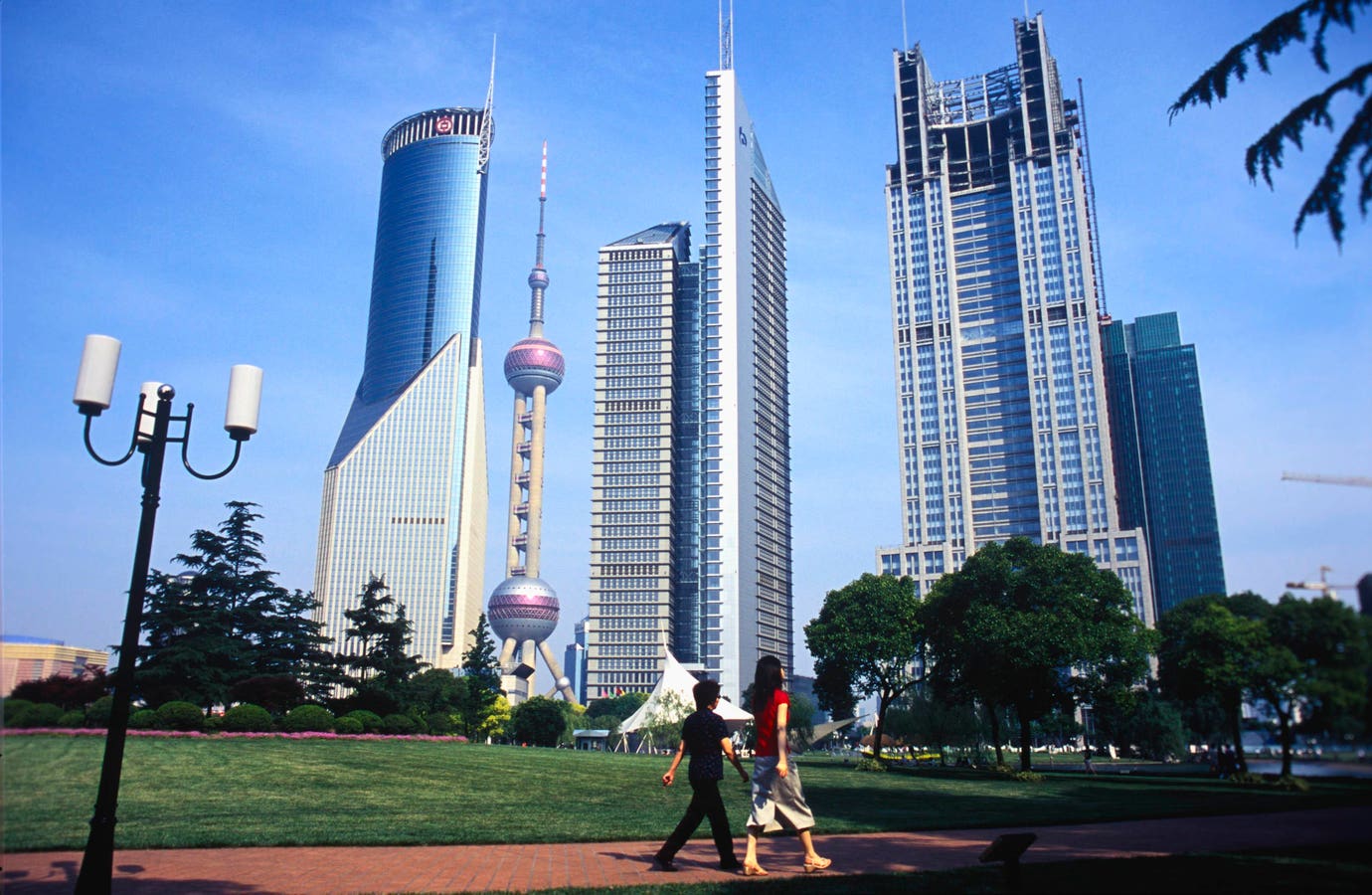
It appears commercial real estate in China is following the dangerous directions of its residential cousin. Even as the collapses of residential real estate developers Evergrande and Country Garden have occupied the headlines, news has emerged of weakness in commercial space, especially office buildings. Vacancy rates have risen, and rents have declined. The problem is likely to get worse, impeding in yet another way adding yet another way Beijing’s efforts to get the economy back on an adequate growth track.
Beijing never hyped office construction the way it did residential development. Commercial problems then do not stem from the overbuilding that is so evident in the residential area. But there are problems nonetheless. Instead for ridiculous overbuilding and over-leveraging, office space suffers from the legacy of Covid lockdowns and quarantines. It seems that Chinese white-collar workers have embraced work-from-home, much like office workers in the United States and Europe. The trend may be even stronger in China than in the west because Beijing’s zero-Covid policies kept lockdowns and quarantines in place in China long after western economies re-opened and returned to work. This and staffing reductions in response to the general slowdown in China’s economy have precipitated a marked reduction in demands for office space.
The official National Bureau of Statistics offers few figures on office vacancy rates, but there are other sources of information. One comes from the regular reports of the British real estate service provider, Savills. That company offers a review of grade-A office space in China’s top cities — Beijing, Shanghai, Guangzhou, and Shenzhen – and indicates that in the April-June quarter, the most recent period for which data exists, office vacancies rates rose across the board. The rate in Shenzhen rose some 4.1 percentage points to 27 percent. In Guangzhou, it rose still more, 5.9 percentage points to 20.8 percent. The other two cities under review showed figures in between these two. A broader figure covering 18 cities from the real estate services company CBRE puts the average vacancy rate at 24 percent.
Rents accordingly have dropped. According to Savills, Grade-A office space in Beijing rented during the spring quarter at the equivalent of $45.00 a square foot, 7.4 percent below year-ago figures. Rents in Shanghai, Guangzhou, and Shenzhen fell as well.
With rents in decline, it is entirely reasonable to raise concerns about the financial health of commercial real estate developers and whether they will follow Evergrande, Country Garden, and other residential developers toward financial failure. Such an event or even close to it would surely compound the already severe problems facing China’s financial system and Beijing’s efforts to manage the situation. So far, there are no reports of financial difficulties among commercial property developers, but some will surely emerge if, as now seems likely, rents continue to decline.
Even before this bad news on office space emerged, China faced an array of formidable economic problems. With Europe in or near recession and the U.S. economy slowing and perhaps approaching recession China’s still important exports were in decline. The dramatic collapse of the residential real estate sector and its leading firms continues to weaken Chinese finance, no small consideration since China already faced a significant debt overhang, especially among local and provincial governments. Problems among developers as well as the legacy of Covid lockdowns and quarantines had dried up housing demand and the resulting drop in housing values had so badly hit the net worth of Chinese households that they restrained the flow of consumer spending that might otherwise have propelled China’s economic recovery. These same factors, plus Beijing’s sudden use of old Marxist tropes, discouraged investment by private Chinese businesses so that their spending flows have actually begun to decline.
And now the rise in office vacancy rates promises to weaken even further China’s already precarious financial system and add yet other economic difficulty to this already large pile of problems. At the very least these matters will deny Beijing the flow of private investment spending that it has been trying mightily to rejuvenate. These commercial real estate problems may not be the final straw that breaks the camel’s proverbial back, but this latest news is far from good news.
Read the full article here