

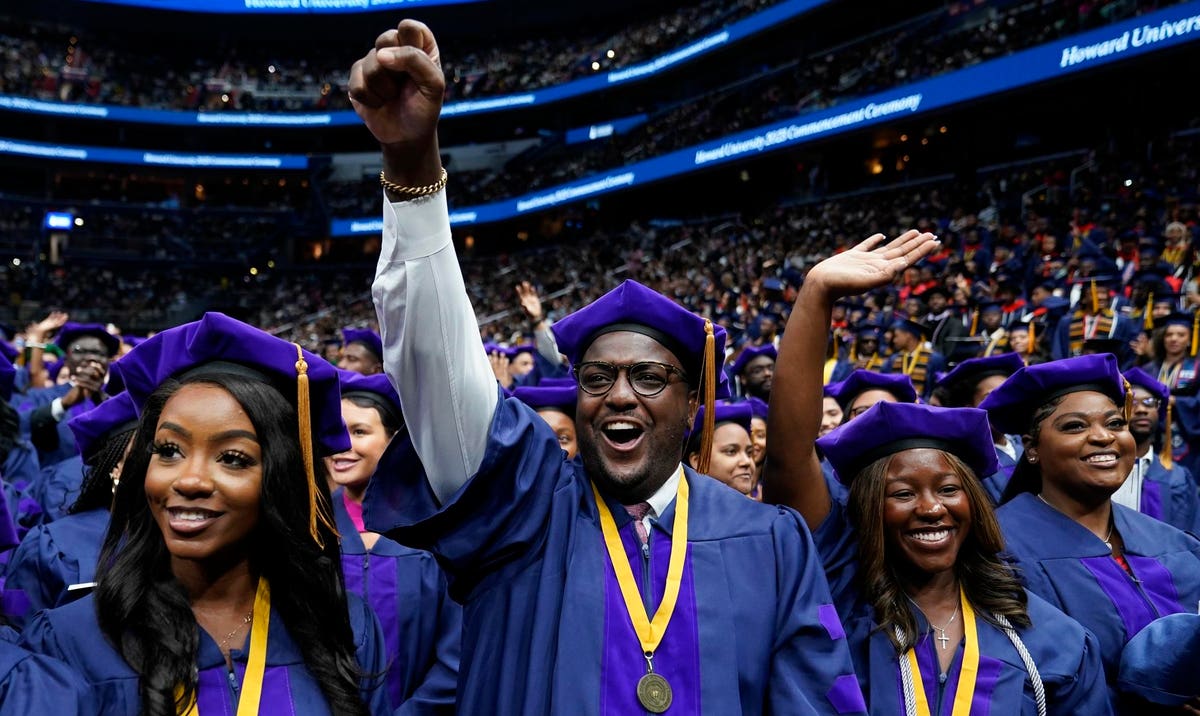
This past academic school year, the eight Ivy League institutions – Harvard, Princeton, Yale, Penn, Columbia, Brown, Dartmouth, and Cornell – enrolled a total of 68,968 undergraduate students — only 5,063 of them were Black. Howard University, a single institution, enrolled 5,916 Black undergrads. It’s one of our nation’s 103 Historically Black Colleges and Universities and Vice President Kamala Harris’ alma mater. Florida A&M, North Carolina A&T, Prairie View A&M, Southern, and Tennessee State are five other individual HBCUs at which Black undergraduate enrollments exceed the cumulative sum of Black bachelor’s degree seekers across the Ivies.
This week’s Supreme Court ruling on Affirmative Action dealt a devastating blow to Harvard and other highly-selective institutions that compete for top students of color. Now that race-conscious admissions policies and practices have been deemed unlawful, highly-selective schools like Stanford, MIT, University of Chicago, Duke, Northwestern, and the Ivies are at risk of having even fewer Black students in future cohorts. The University of Southern California, where I’m a tenured professor, is a highly-selective private institution. In our most recent admission cycle, 80,790 students applied; only 9.9% were accepted. Black students comprise 13% of our admitted class this year, the largest in USC’s history. Without discriminating against white or Asian American applicants, these results were achieved within a state that had long outlawed Affirmative Action.
U.S. News & World Report consistently ranks the Ivies and USC among its Top 50 National Universities. Six of the 10 University of California campuses, all public schools, join us and other highly-selective privates in the magazine’s Top 50 ranking. The UC System has long struggled to rebound from a 1996 ballot measure that made race-conscious admissions and employment practices illegal in the state of California. A decade after voters passed Prop 209, UCLA had just 96 Black students in its incoming class of 4,852 freshmen, a legendary group that TIME senior correspondent Janell Ross calls the ‘Infamous 96.’ Today, Black students comprise only 2% of undergraduate enrollments on five of the highest-ranked UC campuses, and 3% at UCLA, our nation’s top ranked public school. Comparatively, the average across the Ivies is 7%. Although they enroll students from across all racial groups, no HBCU has ever had a Black enrollment percentage that’s anywhere nearly as low as they are at the UCs and the Ivies.
Since they were first established in the mid-1800s, HBCUs have always extended college access to talented Black students whom the Ivies and other predominantly white institutions (PWIs) systematically overlook. To be sure, HBCUs aren’t second-choice schools filled with Black students that other institutions didn’t want. For at least five decades now, most HBCU students could’ve attended PWIs, but intentionally chose to spend their undergraduate years in identity-affirming, culturally-inclusive educational environments. Unlike most PWIs, (especially highly-selective places like the Ivies), HBCUs have always wanted Black students and they’ve admitted them without discriminating against applicants from other racial groups.
HBCUs will continue recruiting and admitting academically promising Black Americans. The Ivies and their competitors were already doing a pitiful job of this before the Supreme Court deemed race-conscious admissions policies and practices unconstitutional. Even in this new restrictive environment, PWIs could find extraordinarily talented, incontestably deserving Black applicants — but like HBCUs, they have to want them. Do they really want them?
In his book, The State Must Provide, Adam Harris, a staff writer at The Atlantic, compellingly documents how HBCUs have been chronically underfunded since their founding. Harris’ findings are consistent with research that colleagues and I published in the Journal of Higher Education 14 years ago. HBCUs have always punched above their weight in the recruitment and admission of Black students. They’ll do even more in this new post-Affirmative Action era. Equitably funding them and remediating past financial wrongs is the very least that our federal government, state legislatures, and public higher education systems can do to reward HBCUs for doing the work that the Ivies, the UCs, and other highly-selective institutions never really cared enough to do well.
Businesses that espouse a serious interest in attracting Black professionals and leaders ought to invest many more of their corporate social responsibility and college partnership dollars into HBCUs. As it pertains to college access for extremely promising Black students, Albany State, Morehouse, Dillard, Spelman, Bennett, Morgan State, Delaware State, Claflin, Jackson State, Bethune-Cookman, Norfolk State, and the 92 other HBCUs are where it is and always has been. Individual philanthropists, public and private foundations, federal and state government agencies, and companies should invest more money into those institutions, especially now.
Read the full article here