


Late last month, NBC Bay Area published a story from its investigative unit on the perils of using text-to-911 services because it can’t locate you as quickly or precisely as calling emergency services. The story, a shared byline with Candice Nguyen, Jeremy Carroll, Erin Panell, and Michael Horn, found California’s text-to-911 system “disproportionately [impacts] the Deaf and victims of violence” in large part because geolocation data isn’t as accurate as conventional voice calls to 911.
According to Nguyen and her colleagues, California’s Text-to-911 feature “falls behind on geolocation speed and accuracy when compared to voice 911 calls.” In an interview, 911inform’s Mark Fletcher told NBC News Bay Area “location is the most important piece of information a dispatcher needs from a caller, especially in a life and death situation,” adding the 911 machinations was built and remain heavily predicated on voice use. In 2021, state law required all 911 call centers in California to accept emergency texts in addition to the customary telephone calls.
Of course, this presents a big problem in terms of accessibility.
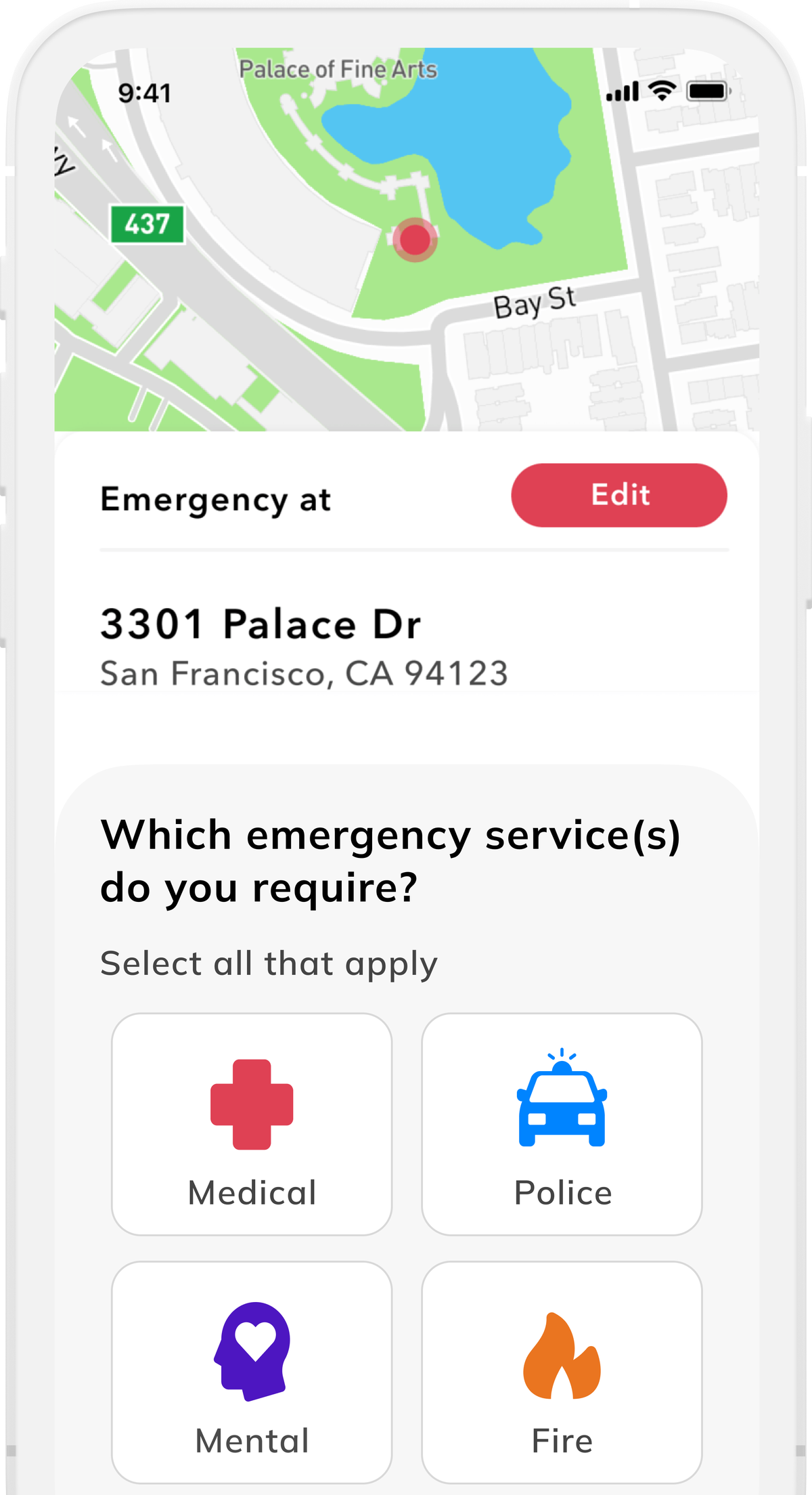
The report couches the story around the experiences of William Wong Ed.D, a math professor in the Bay Area, and his daughter Gabriella. In 2015, the elder Wong almost died from a gallbladder emergency; the crisis led his daughter Gabriella to start AccesSOS as a way to make 911 more accessible to everyone. In fact, that’s the whole tagline on the tech non-profit’s website: “making emergency help accessible for everyone.” There’s an iOS app on the App Store, with Android “coming soon.”
According to statistics on the AccesSOS website, 37 million Americans lack the ability to hear or speak out loud, while nearly half, or 49%, of 911 calling centers are unequipped to receive text-based messages.
Available in Berkeley, California and Santa Fe, New Mexico, AccesSOS works by determining a person’s location using a Wi-Fi or cellular connection. After a few taps, the software packages a message to 911 services containing the user’s location and type of emergency. The app has garnered “huge reactions” from those in the Deaf community, according to the report. Dr. Wong told NBC Bay Area he and his wife are “so thankful” for AccesSOS, adding it’s a resource his community needs.
As I said to Nguyen on X/Twitter recently, the existence of textual 911 calls should, in theory, be a boon to many more people with disabilities than the Deaf and hard-of-hearing. Texting emergency services is also immensely beneficial to people who, like me, have a stutter or other speech delay that makes fluent communication less intelligible. As one personal anecdote, I can attest to the stress inherent in calling 911 has ratcheted up my stutter in the past. This has caused friction between me and the operator in explaining the situation at hand. In a functional sense, my issues with speech are more or less on par with the problems faced by the Wongs and other Deaf and hard-of-hearing families. Moreover, as a lifelong CODA who was the live-in interpreter for my parents my entire childhood, calling 911 (infrequent though it was) was unquestionably my job because my parents couldn’t hear or speak—and, growing up in the late ‘80s and ‘90s, meaningful text messaging beyond my parents’ TDD machine was a mere pipe dream at that point in time.
The moral? Calling 911 simply isn’t feasible for everyone. Full stop.
“My dad pays the same amount of taxes, but does not have that vital access to 911. And that’s not fair,” Gabriella told NBC News Bay Area about the inequality of accessing essential emergency services.
NBC Bay Area also noted many in the Deaf and hard-of-hearing community, such as Tina Truong, are displeased with the “Call if You Can, Text if you Can’t” awareness campaign run by the California Office of Emergency Services. Truong said in an interview for NBC News Bay Area’s story the messaging makes her feel as though the state agency, responsible for the oversight and rollout of the Text-to-911 program, “[prefers] voice calls over text messages, and that didn’t encourage me to contact [911].” The discouragement has pushed Truong to stay in more than go out due to fear she couldn’t access help should the need arise.
Nguyen appeared on NBC Nightly News to discuss Text-to-911.
Read the full article here