


Apple’s latest keynote this week wasn’t just another iPhone launch—it marked the end of an era. As the company unveiled the stunningly thin iPhone 17 Air, one detail stood out: the SIM card slot is gone, everywhere, for good. What started quietly in 2018 with the first eSIM option, and accelerated in 2022 with U.S. iPhones dropping physical SIMs, has now gone global. With this move, Apple isn’t just slimming down its hardware—it’s rewriting the way billions of people around the world will connect their devices to mobile networks.
At first glance, eliminating the SIM slot may feel abrupt. Millions of users worldwide will now experience eSIM for the first time—an invisible, digital replacement that takes the place of the plastic card we’ve relied on for decades. But as history has shown with
Apple, when it chooses to retire a long-standing technology, it’s usually because the company sees the path forward more clearly than the rest of the market. We saw this with the floppy disk, the headphone jack, and even optical drives. Each decision accelerated digital adoption, and I expect eSIM will play out the same way.
What eSIM Means for Consumers
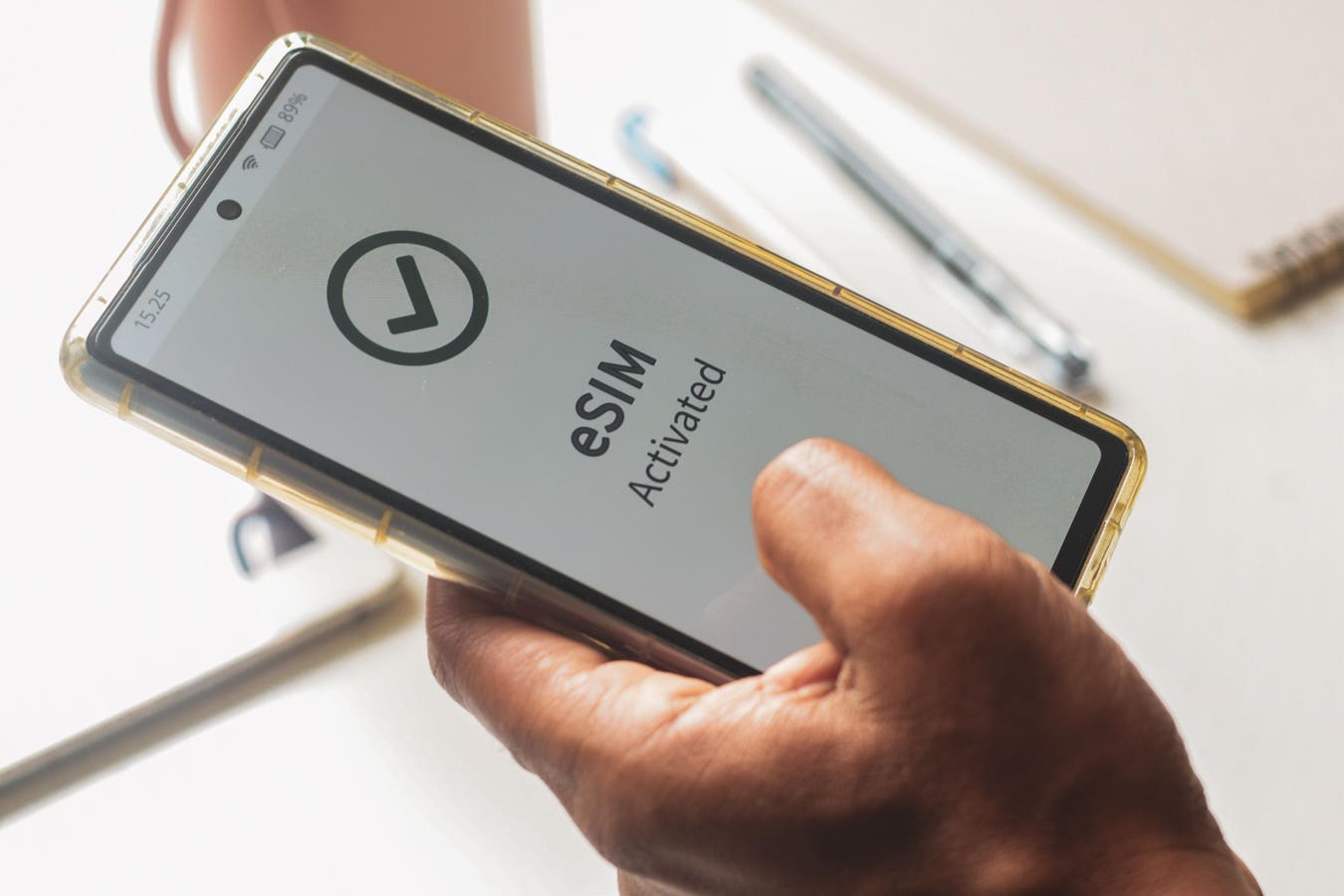
An eSIM, or embedded SIM, is a standardized digital chip inside every compatible phone. Instead of inserting a card, you can activate a service plan in minutes—directly from your device or through an app. This ease of activation makes switching carriers quicker and more flexible than ever before. For consumers, this shift removes friction. One no longer needs to visit a store to change providers; with a few taps, you can install or switch plans on demand.
Frequent travelers stand to gain the most immediate benefit. Until now, arriving in a new country often meant scrambling for a local SIM card at an airport or kiosk. With eSIM, you can download a plan before leaving the plane. This new convenience could redefine the travel experience by making connectivity seamless, affordable, and secure across borders.
eSIMs also provide better security. A lost or stolen handset can have its eSIM remotely disabled—no card to remove, copy, or misuse. This feature makes eSIM a safer system not just for individuals, but also for enterprises managing large fleets of mobile devices.
The Impact on Telecomm Industry
Beneath the consumer layer, Apple’s move signals a massive disruption for telecom providers. The physical distribution of SIM cards—an industry worth billions in logistics, packaging, and retail—will inevitably shrink. Connectivity is becoming a digital service, not a physical product, and that means carriers will need to improve their apps, customer experiences, and pricing models to stay competitive. The shift also removes traditional switching barriers, putting far more power in the hands of consumers to move between operators.
Still, some markets will face transitional hurdles. In certain countries, legal or industry systems still rely on physical SIMs for identity verification, signatures, or other regulatory functions. It will take time for local governments and institutions to adapt those frameworks to eSIM. But as we’ve seen throughout tech history, these systems eventually evolve under pressure from both industry innovation and consumer demand.
Looking Beyond the SIM
Apple’s move with the iPhone 17 Air goes beyond a simple hardware choice. It represents a deeper trend that we’ve seen play out in technology: the shift from physical components to digital systems. In the same way our movies, music, and even payments have shifted software-first, mobile connectivity is taking the same path.
Apple’s recent announcement isn’t just about Apple retiring another piece of outdated tech. It’s about setting a new standard for mobile connectivity—one that prioritizes flexibility, security, and digital-first experiences. For users, it means freedom and simplicity. For telcos, it means rethinking their business models. And for the industry at large, it marks the start of a world where your mobile identity lives in the cloud, not in a piece of plastic.
Disclosure: Apple subscribes to Creative Strategies research reports along with many other high tech companies around the world.
Read the full article here