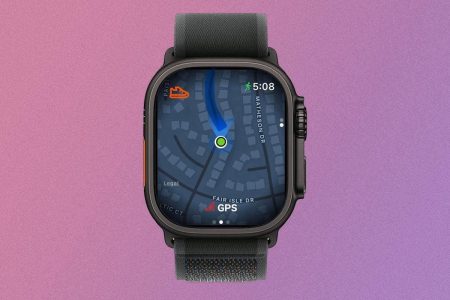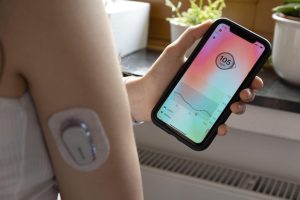



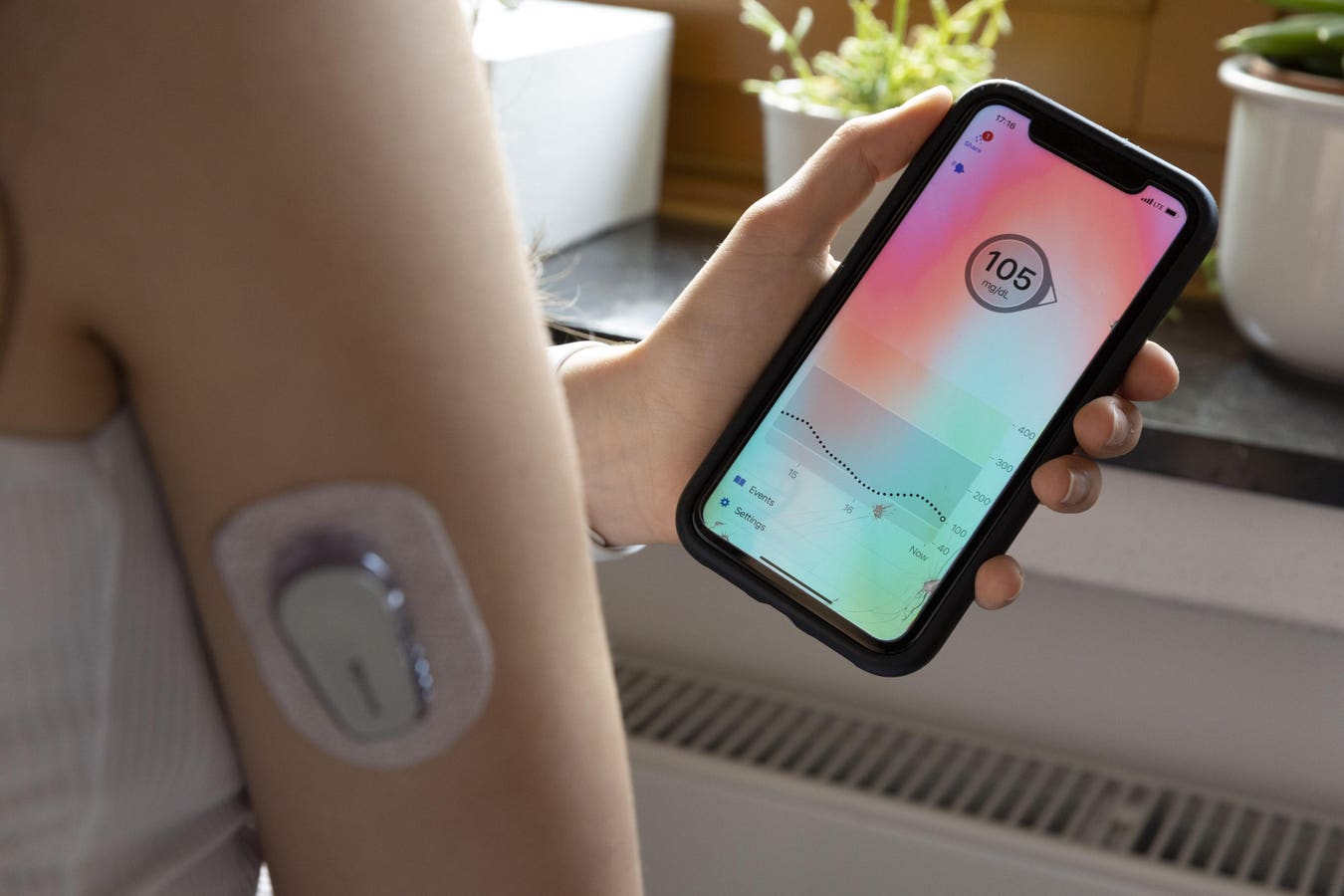
For decades, a blood draw in a clinical lab was the only way to quantify your hormones. In 2026, that paradigm is shifting and we are seeing saliva cartridges analyzed by smartphone AI, DNA-based biosensor patches, earring-back wearables, and sweat sensors are converging to make hormone tracking as routine as measuring heart rate. The market, valued at $325.7 million in 2025 and projected to reach $716.2 million by 2035, is opening up to a broader hormonal health market representing an estimated $600 billion opportunity The filed is now bubbling up with cohorts of academic breakthroughs, deep tech hardware bets, and AI platforms that are changing how we might be measing hormones in years to come.
Measuring Hormones Is The New Measuring Glucose
The comparison to continuous glucose monitoring (CGM) runs through every pitch deck in the category. The endocrine testing market reached $2.99 billion in 2024 on a trajectory to $6.75 billion by 2034 at 8.54% CAGR , while the femtech market is projected at $140.64 billion by 2035. In 2024, global femtech investment reached $2.2 billion, 8.5% of total digital health funding. McKinsey estimates that for every $1 invested in women’s health, approximately $3 is projected in economic growth.
2026 Continuous Hormone Monitoring: The Market Map
The 2×2 map below plots the competitive landscape across two axes: data modality (left: clinical/periodic; right: continuous/consumer) and market positioning (bottom: clinical/prescription; top: platform/consumer ecosystem).
Quadrant 1: The Incumbents – Deep Pockets, Slow Clocks
Abbott Laboratories’ diagnostics segment generated $9.3 billion in revenue in 2024 as reported in the Abbott 2024 Annual Report. Labcorp became the first U.S. commercial lab to adopt Roche’s Cobas Mass Spec platform for steroid hormone testing , 100 hormone results per hour, a 400% efficiency improvement over traditional LDTs. Germany’s Inne achieved a landmark regulatory milestone as the first saliva-based contraception certified in the UK and EU (June 2025), backed by €18.8 million in Series A+ funding, validating the regulatory pathway for non-blood hormone analysis.
Quadrant 2: Smart Devices – The Deep Tech Hardware Wave
Level Zero Health co-founded by ex-Palantir enterprise lead Ula Rustamova and Philips medical device engineer Irene Jia, has developed DNA-based biosensors that detect hormones in interstitial fluid with 98% accuracy across four hormones: progesterone, estrogen, cortisol, and testosterone. A $6.9 million pre-seed round led by Redalpine closed in February 2025 . Level Zero has secured $3 million in letters of intent from IVF clinics. Their stepping-stone single-use intermittent device targets prescription markets (IVF, TRT) first; the continuous wearable is slated for 2028.
Pheal, founded by Eike & Agnes (Germany), is building a modular multi-analyte smart patch platform that monitors biomarkers from ISF, sweat, and capillary blood. Pheal’s platform spans cortisol, glucose, lactate, sodium, troponin, and many more, a horizontal platform play with disposable sensor layers on a reusable reader. Pheal is in development stage, targeting multiple disease management use cases.
Delphea / Aurelia Vitals is pioneering an earring-back wearable form factor for medical-grade behind-ear temperature monitoring. Founded by Dr. Alisha Menon (Ph.D. EE/CS, UC Berkeley; postdoctoral researcher, Rice University), Delphea delivers temperature readings every 5 seconds, runs 30 days on a single charge, and provides fertility window and hormonal shift tracking via Bluetooth app. The behind-ear location mirrors clinical thermometer placement for superior accuracy versus wrist-worn devices.
Quadrant 3: The Ecosystem — Big Tech’s Long Game
Platform players infer hormonal state from proxy biometrics. Oura Ring’s Cycle Insights , backed by the company’s $900M Series E (2025), uses continuous biometric data and its 0.13°C temperature accuracy to track menstrual cycle phases. Flo Health reached a $1 billion valuation in November 2024, added 130 roles in Vilnius (reported in December 2024), and sits on over 300 million downloads, a behavioral dataset that could anchor predictive hormone models once biomarker ground truth is available.
Hormona raised $6.7 million in an oversubscribed seed round led by Voima Ventures and SuperNode Global VC in May 2025. Founded in 2020 by CEO Karolina Löfqvist and COO Jasmine Tagesson, Hormona offers AI-driven at-home hormone testing with 2M+ data points from 185+ countries.
Quadrant 4: AI-Driven Solutions – The Category Creators
Eli Health debuted at CES 2025 winning the Best of Innovation award in Digital Health and has since raised a total of $20 million, including a $12 million Series A led by BDC Capital’s Thrive Venture Fund in June 2025 . The Hormometer’s AI computer-vision system analyzes saliva test strips to measure cortisol (launched September 2025), with testosterone and progesterone pre-orders open and shipping Q1 2026. Twelve patent-pending innovations underpin the IP moat. CEO Marina Pavlovic Rivas: “We are making hormone monitoring as simple and accessible as checking your heart rate.”
Clair represents the continuous wearable AI thesis for women’s health. The world’s first continuous, noninvasive wearable hormone tracker built specifically for women, Clair’s AI delivers personalized insights across fertility, perimenopause/menopause, hormonal health, and athletic performance optimization for women aged 19–50. Its platform features hormone predictions, performance zone guidance, smart insights, and partner sharing , the full-stack model investors are rewarding. The device is still not shipping.
ACADEMIC RESEARCH SPOTLIGHT: THE SCIENCE ENABLING THIS CATEGORY
Caltech / Wei Gao Lab: Wearable Estrogen Patch — Nature Nanotechnology, 2024
Published in Nature Nanotechnology (2024, 19, 330–337) and covered by Caltech News, research from Professor Wei Gao’s lab at the California Institute of Technology represents a fundamental advance in non-invasive hormone sensing. The team developed a skin-interfaced wearable aptamer nanobiosensor using target-induced strand displacement to monitor estradiol — the most potent form of estrogen – via in situ sweat analysis. The device achieves an ultra-low detection limit of 0.14 pM using gold nanoparticles and titanium carbide MXene films, with autonomous sweat induction via iontophoresis, microfluidic sampling, and real-time BLE wireless transmission to mobile devices. Human trials confirmed cyclical sweat estradiol fluctuation correlated strongly with blood levels. Funded by NIH, NSF, Office of Naval Research, American Cancer Society, and a Sloan Fellowship.
Gao has stated his goal of miniaturizing a multi-hormone sensor suite into a ring form factor, directly prefiguring the design targets of commercial startups in this market. His full publication list is at gao.caltech.edu/publications.
Key Implication: The Caltech/Gao nanobiosensor demonstrates that sweat-based estrogen detection at physiologically relevant concentrations is scientifically achievable. The commercialization gap between this academic proof-of-concept and a consumer-grade wearable is the exact opportunity space in which Level Zero Health, Pheal, Clair, and Delphea are competing.
8 Key Trends Driving The Market
Drawing on Femtech World, Galen Growth, Voima Ventures, company primary sources, and peer-reviewed research – eight structural trends are reshaping this market:
Trend 1: From Tracking to Predicting
Femtech pivots from reactive data logging to proactive AI coaching. The next generation predicts hormonal events before they occur , driving up platform retention and clinical value. For anyone using menstrual tracking apps, you know this was a long time coming but is finally here powered by AI.
Trend 2: Biomarker Wearables Race
Sweat biosensors (Caltech/Gao; Pheal), interstitial fluid DNA sensors (Level Zero Health), and behind-ear temp wearables (Delphea) represent a new wave of clinical-grade continuous biomarker devices.
Trend 3: AI Contextual Intelligence
LLM-powered coaching interprets cycle data, HRV, sleep and lab results together. Context-aware AI replaces generic advice with personalized hormonal coaching at scale.
Trend 4: Longevity × Reproductive Science
Menopause, ovarian aging and hormone-driven cellular decline are merging with longevity science. Hormonal health is becoming a pillar of precision medicine.
Trend 5: Regulatory Maturation
Inne’s EU/UK saliva contraception certification (June 2025) and Eli Health’s CES 2025 Best of Innovation award signal accelerating regulatory pathways for non-blood hormone analysis.
Trend 6: Men’s Hormones Enter the Arena
Testosterone, cortisol and DHEA monitoring for men (Eli Health testosterone pre-orders; Clair athletic use case) represents an equally large, underserved adjacent market.
Trend 7:Platform Data as Strategic Asset
Companies building longitudinal multi-hormone datasets are building pharmaceutical research and precision medicine licensing value that dwarfs device revenue.
Trend 8: Health System Integration
Health systems now account for 23% of all femtech collaborations, surpassing big pharma for the first time (2024). Clinical validation is becoming the price of entry.
Conclusion: Hormones Are Everywhere
As hormone sensing moves from the clinic to the continuum of daily life, the category is poised to do for endocrine health what CGMs did for metabolic awareness: turn invisible physiology into actionable, real-time insight. The convergence of biosensing breakthroughs, AI interpretation layers, and platform-scale datasets suggests that the winners will not simply sell devices, but will own longitudinal hormone intelligence and the behavioral ecosystems built on top of it. Crucially, hormone health sits at the center of a wide constellation of ancillary services; from mental health and fertility to workplace productivity, athletic performance, sleep optimization, and broader wellness. This makes hormonal data a foundational signal layer for next-generation health platforms. For investors, clinicians, and builders alike, the opportunity is less about digitizing a lab test and more about redefining how individuals understand fertility, stress, performance, aging, and overall health. The coming decade will determine which players translate scientific feasibility into trusted, regulated, and habit-forming products, and in doing so, transform hormone literacy from a niche medical concern into a foundational pillar of precision health.
Read the full article here