



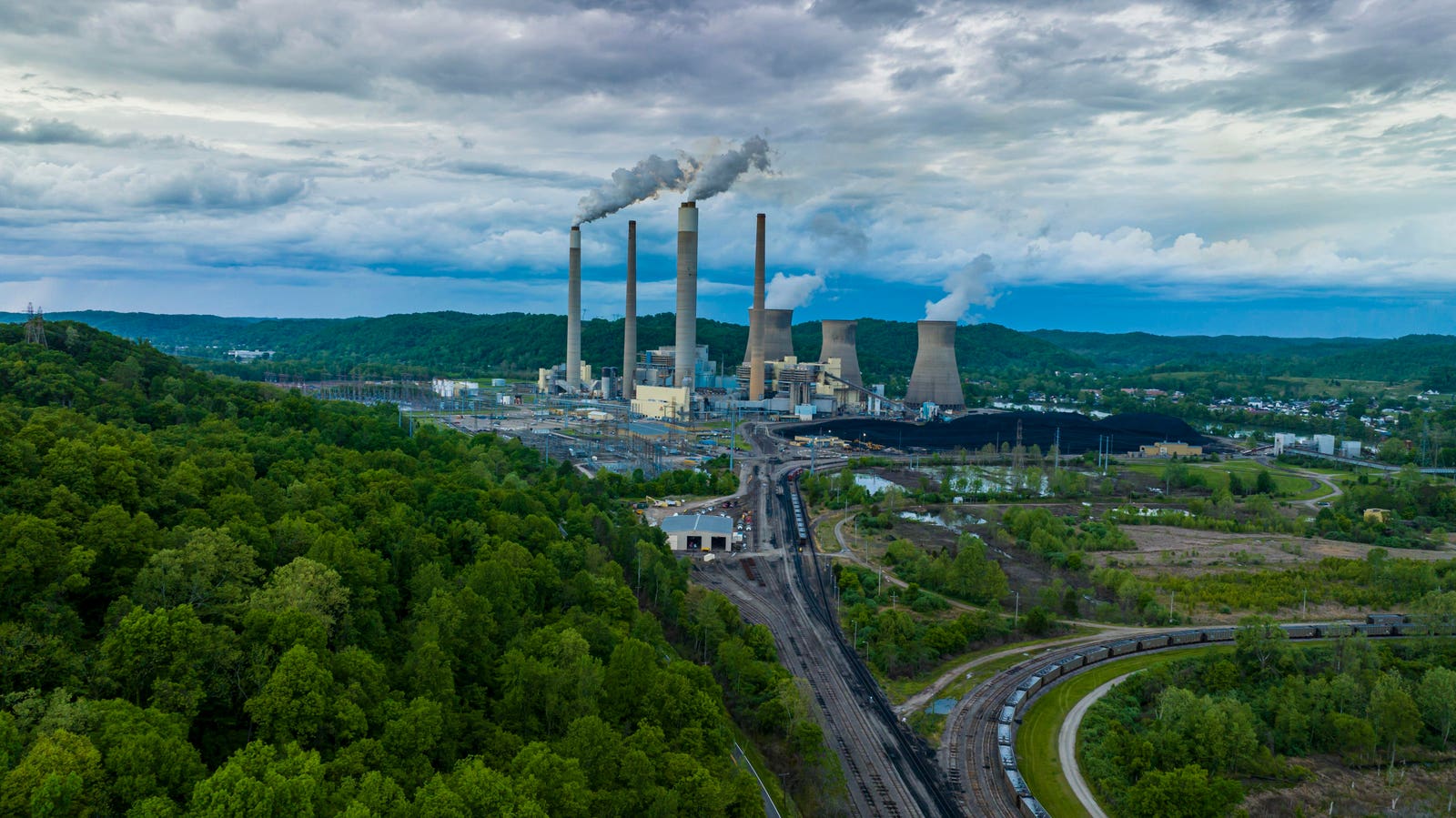
Amid political drama, a quieter but more consequential move is underway: Donald Trump wants to repeal the EPA’s Endangerment Finding — the legal cornerstone of federal climate action. The Finding, issued in 2009, legally obligates the EPA to regulate greenhouse gases under the Clean Air Act.
Yet, this is one of Trump’s most radical—and legally risky—climate moves to date. Politically, it signals that climate denial has shifted from questioning science and dissing carbon-free solutions to disabling the government’s ability to act on it.
This move would undermine the legal basis for nearly every federal climate initiative since 2009. If it succeeds, it could eliminate the federal government’s duty to combat climate pollution. The result? It would weaken emissions standards across transportation, power, and industry, exposing Americans to greater health and financial risks from unchecked warming.
“Without the Endangerment Finding, there’s no legal reason for EPA to act on climate,” said Jody Freeman, Harvard law professor and former climate adviser under President Obama. “This isn’t just another deregulatory move—it’s foundational.” Air pollution from fossil fuels is linked to 1 in 5 global deaths, according to a 2021 Harvard study.
When the EPA issued the Endangerment Finding in 2009, it identified six greenhouse gases—particularly carbon dioxide and methane—that threatened human health and welfare. Hence, EPA’s regulatory reach extended. It covers power plants, vehicle emission standards, and permitting rules for large industrial facilities.
The Finding followed the Supreme Court’s 2007 ruling in Massachusetts v. EPA, which determined that greenhouse gases are “air pollutants” under the Clean Air Act. Consequently, EPA cannot simply ignore them if they threaten public health. Because the 2009 Finding is based on scientific evidence, repealing it would require new data, a complete administrative process, and likely court review.
Greenhouse gas regulation brings well-documented public health co-benefits, including reductions in particulate matter and nitrogen oxides. According to EPA estimates, past rules tied to greenhouse gas limits have saved between 12,000 and 15,000 American lives annually due to improved air quality.
A Keystone In U.S. Climate Law
Meanwhile, the economic cost of inaction is soaring. NOAA reports that U.S. climate disasters caused $95 billion in damages in 2023 alone. The National Climate Assessment warns that climate-driven economic losses could exceed $2 trillion by 2100 if emissions continue unchecked.
“The agency ignored the benefits of greenhouse gas reductions altogether, pretending they don’t exist. EPA’s analysis merely shows—tautologically—that if one ignores the benefits of regulation, regulation has only costs,” said Richard Revesz, professor and dean emeritus at the New York University School of Law, in a Slate column.
Legally, repealing the Endangerment Finding is a minefield. Under the Administrative Procedure Act, EPA must offer new scientific reasoning to justify reversal—an argument almost no peer-reviewed science supports. A 2021 review in Environmental Research Letters found 99.9% of climate science papers attribute warming to human activity.
The Supreme Court’s 2022 decision in West Virginia v. EPA limited EPA’s ability to enforce broad climate rules through the “major questions” doctrine. However, it did not affect the Endangerment Finding itself. Courts have consistently declined to question the underlying science.
Lisa Heinzerling, a Georgetown law professor and former EPA attorney, told Environmental Law Reporter that repeal efforts would be met with intense opposition and run counter to decades of environmental jurisprudence. “The Clean Air Act requires EPA to study pollutants, assess their danger, and set standards”—full stop, she said.
Trump’s rollback fits a larger trend. His administration has left the Paris Agreement and is working to undo at least 30 environmental regulations while loosening caps on power plant emissions—actions that appeal to fossil fuel donors and ideological groups like the Heritage Foundation, which pushed for repeal in its “Project 2025” plan.
However, these steps clash with the direction of the business community. According to Climate Impact Partners’ 2024 report on the Fortune Global 500, 45% of companies have net-zero goals by 2050. That’s up from 39% in 2023 and considerably greater than the 8% in 2020.
Legal Chaos Meets Business Reality
To that end, most major U.S. companies have climate targets and disclosure rules. Microsoft aims to be carbon-negative by 2030. GM plans to phase out internal combustion vehicles by 2035. Even ExxonMobil has pledged net-zero Scope 1 and 2 emissions by 2050.
“For nearly two decades, businesses across the U.S. have directed investment and charted long-term plans based on the widespread understanding that the EPA can and should set rules to address climate pollution,” said Anne Kelly, vice president of government relations, Ceres. “Any move to undo this vital policy foundation would send shockwaves throughout the economy.”
Policy volatility threatens the infrastructure, energy, and manufacturing sectors—particularly companies like NextEra Energy, Cummins, and Siemens USA that depend on clear climate regulations for capital planning. Investor coalitions and global regulators, especially in Europe, are monitoring the situation closely. A repeal would indicate that U.S. climate policy is politically fragile, making it more difficult for any business to plan, invest, or lead internationally.
There is no new scientific consensus challenging the 2009 Finding. Instead, some officials may try to redefine EPA authority by arguing it can now ignore pollutants it once deemed dangerous—a line of reasoning that the U.S. Supreme Court already rejected in 2007.
However, it remains a key part of the current administration’s stance—presented with more polished messaging. It’s simply the rebranding of climate denialism.
While the repeal might resonate in parts of West Virginia, Pennsylvania, and Ohio, it won’t bring coal back. Market forces—not regulation—have driven coal’s decline. U.S. coal generation has dropped by more than 50% since 2007. Utilities are shifting to cheaper, cleaner options regardless of federal policy.
Groups like Reimagine Appalachia argue that real regional revitalization comes not from reversing environmental progress, but from clean manufacturing, broadband, and job retraining. “Ignoring the problems caused by greenhouse gas emissions will not make them go away,” the group said.
Even if the repeal fails in court—or drags on—it could still cause years of legal uncertainty, chilling innovation and enforcement. At a time when billion-dollar wildfires and record heat waves are rising, the message from Washington isn’t climate readiness. It’s a return to the 1950s.
The science may be overwhelming. But don’t underestimate how much industrial power and political ambitions can undercut progress.
Read the full article here