


As the world of fitness increasingly embraces artificial intelligence, questions arise about the efficacy and longevity of AI-powered fitness training apps.
While many individuals have turned to OpenAI’s ChatGPT to devise their workout routines, a plethora of AI-driven apps, such as Fitbod, FitnessAI, and Freeletics, promise results akin to those achieved with a personal trainer.
In terms of accessibility, these apps excel at providing value to consumers. A one-year premium subscription to either Fitbod, FitnessAI or Freeletics varies between $70-100 per year, about the cost of one session with a personal trainer in-person. But are they as effective as working with a real trainer?
To explore the potential of these apps, I spoke with Rishi Mandal, co-founder and CEO of Future. Future is a digital fitness coaching app that connects elite performance fitness coaches to individuals virtually. In fact, the company touts it assembled the largest team of fitness coaches from professional sports in history.
As Mandal explained to me, Future has been leveraging machine learning and AI for quite some time, using its vast dataset of exercises and performance data to customize and optimize workouts for users.
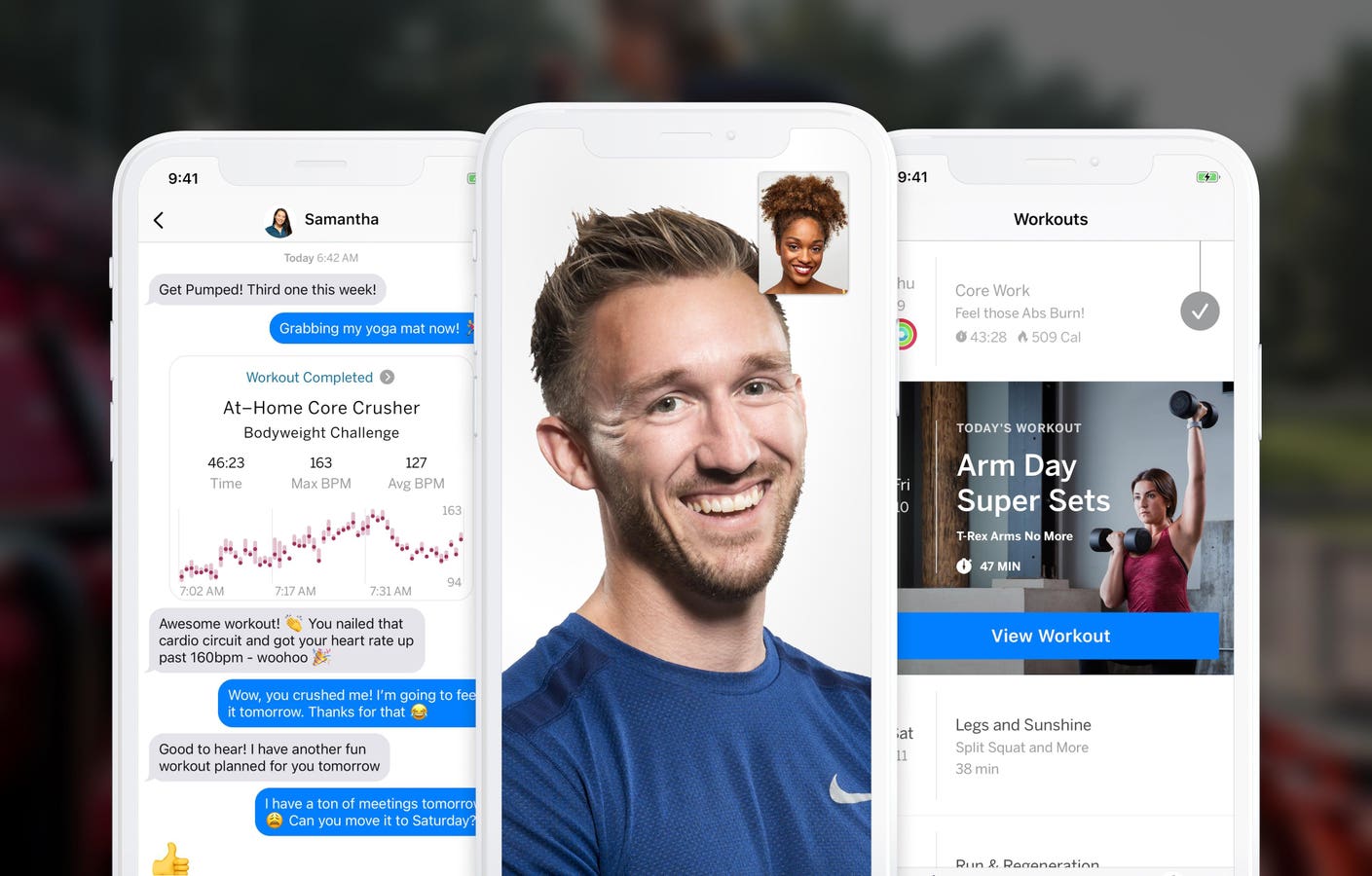
Much like meeting with a personal trainer at the gym, a Future coach will put together a personalized fitness plan for each user. Future coaches can leverage AI to speed up a process that could have taken hours before.
Future members wear a smartwatch, where a trainer can monitor vitals during exercise. Members are able to follow the workout, check in with their coach and track their performance via the smartphone app.
For instance, if a user skips a workout assigned by a trainer, the trainer will check in with the user to see what’s up and if changes need to be made to their training plan.
However, the service costs $199 per month. For the same cost as one month of Future training, you can instead get two years of access to one of its AI-powered competitors. But to a fitness enthusiast accustomed to paying $30 for a single SoulCycle or Barry’s Bootcamp class, or $70-100 for a single personal training session, Future is reasonable.
Mandal believes that while AI can create excellent workout programs, it fails to address the historical barrier of adherence.
“I think pure AI programming will build you a great program. But quite frankly, it’s the same product that we’ve always had,” he said.
“It’s not that remarkable to just spit out a plan. It’s indistinguishable for the average person from a plan that was built with less sophisticated technique. I think the nuance is in the middle where a machine can build something and a human can edit and say ‘Oh, I know Rishi hates that movement.’ Or I’ll put a little audio cue here just to give him that little push or, to talk trash about his Warriors. That’s where we think the magic is.”
He argues that the key to success in fitness lies in the ability to stick with a routine. In his view, the magic happens when a machine generates a plan and a human fine-tunes it, taking into account personal preferences and motivational cues.
“Most of what you see in the AI-powered fitness space is apps trying to build you programs. But that hasn’t been the historical barrier,” he said.
Future employs machine learning and AI to assist coaches in two areas: the IQ, which involves creating safe, effective, and adaptable programs, and the EQ, which focuses on providing information about the best time and method to reach out to members. The company’s unique advantage lies in its extensive, human-labeled dataset, which tracks not only workouts, but also adherence and performance.
Mandal contends that Future’s wealth of data allows its trainers to craft tailored programs for various customers and monitor their adherence. This information enables coaches to build programs with the help of AI, while still retaining the option to create their own plans from scratch.
By harnessing the collective expertise of its trainers, Future aims to bridge the gap between AI and human guidance, offering a more personalized and sustainable approach to fitness.
“In our case, we’ve got an incredible amount of depth and data around what types of programs our trainers can write for different types of customers. We can also see if those customers actually follow those programs and adhere to them,” he said.
“The biggest winners in the AI world are not necessarily going to be the people who build the algorithms. Those things tend to get commoditized over time. It’s the people who possess the largest and most detailed datasets, proprietary datasets, that have the biggest opportunity to do something with those algorithms.”
Read the full article here