

Video caption: This talk on biochemical modeling is interesting from a number of perspectives
Can AI improve medicine? From those connected to clinical processes, the answer that we’re hearing is a resounding “yes!” But how is this going to be accomplished?
We’re seeing that by harnessing data the right way, AI systems can multiply productivity and bring new models to medical offices.
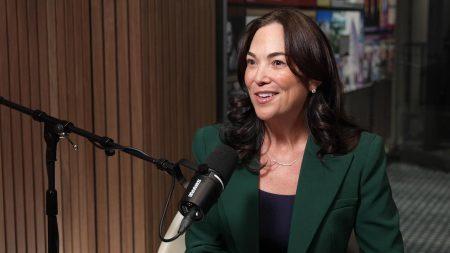
Moving on from some of our early talks on how to use AI to enhance treatments, we have more on biochemical modeling and related concepts from Peter Mikhael, who is describing some of these next-generation initiatives that will almost certainly have a major impact on hospital systems in the years to come.
First of all, Mikhael covers three main areas – predicting risk and outcomes, modeling proteins, and modeling chemical structures
“Chemistry is a very large and diverse space,” he says. “And yet, within this large space, we would like to find the one thing that can potentially be therapeutic.”
Regarding that first goal of prediction, Mikhael talks about building models to know what previous outcomes were in data sets, and reminds us that chemistry exists within a context.
“The context, usually, is a biological system,” he says. “And so then we have to think about biomolecules: things like proteins and peptides. We have to develop approaches to model these things.”
Mikhael talks about tools for early detection that will help with cancer screenings. In terms of modeling chemical structures, he provides the example of finding the best antibiotic, (which was also covered in this CSAIL talk by David Sontag).
He also goes over some ground related to molecular properties – graphing a molecule, and testing it out on a computer before putting trial elements in vitro.
“We do some sanity checks,” he says. “You don’t want something that’s toxic to the human body, that’s toxic to the bacteria… of course, you also want it to be something of a structurally novel molecule, because if it’s something that already exists, you might be rediscovering the wheel.”
As for the proteins, he talks about mutations, and disease, and protein ligand interactions:
“Normally, you have … no abnormalities … the minute you have a few mutations, potentially, now you have a disease,” he says. “In this case, for this particular protein, you have uncontrolled cell growth. And that’s something you would like to sort of address. And the molecules that we’ve been talking about, these drugs, they have to have some particular shape, they have to have some particular conformation that fits in the pocket, such that it inhibits whatever (the) potential protein is doing, right? That’s the idea of potentially a lot of drugs. So how do we do this? How do we actually model this thing, this interaction between the protein and small ligand, such that we know whether or not we have a good drug?”
Then, he digs into the idea of torsional diffusion for molecular docking, something else that, he says, students in the lab have been hard at work on. Listen to this part:
“Assume you have a protein, in this case, sort of SARS-COV-II spike protein, and then some small molecule, and you want to be able to tell exactly where that small molecule fits within the large space of the protein,” he explains. “So what you take … you take the same molecule here, just shown in all different random spots around the protein, and you want to learn to iteratively, sort of move that protein around, twist it, reshape it, such that it fits back into the right pocket that it should be in, and you train a model diffusion model that does this: changes all the torsion angles, moves it around, and you can, over time, learn to just put a molecule somewhere around the protein, and we’ll find the right pocket for it.”
The approach, he said, is something that students call ‘DiffDock’.
“(It’s) the first deep learning method that is better than physics-based methods, which you would imagine has been, you know, that sort of status quo for a long time.”
All of this fits right into some of the biochemical research that’s generating a lot of attention now, and moves behind a lot of what we are doing, both in academia, and in business. Think about, for just one example, the types of things that Ark Invest funds cover, in genomics, in AI/ML, etc. Molecular modeling and some of the other content here is right in the mix, so perhaps in addition to data scientists, healthcare pros, etc. a whole lot of business people should be checking out this video.
Read the full article here