


If a policy imposes costs locally to create benefits across the border, it is likely to run into local opposition. This is the story of Delhi’s air pollution as well as the global slowdown in addressing climate issues.
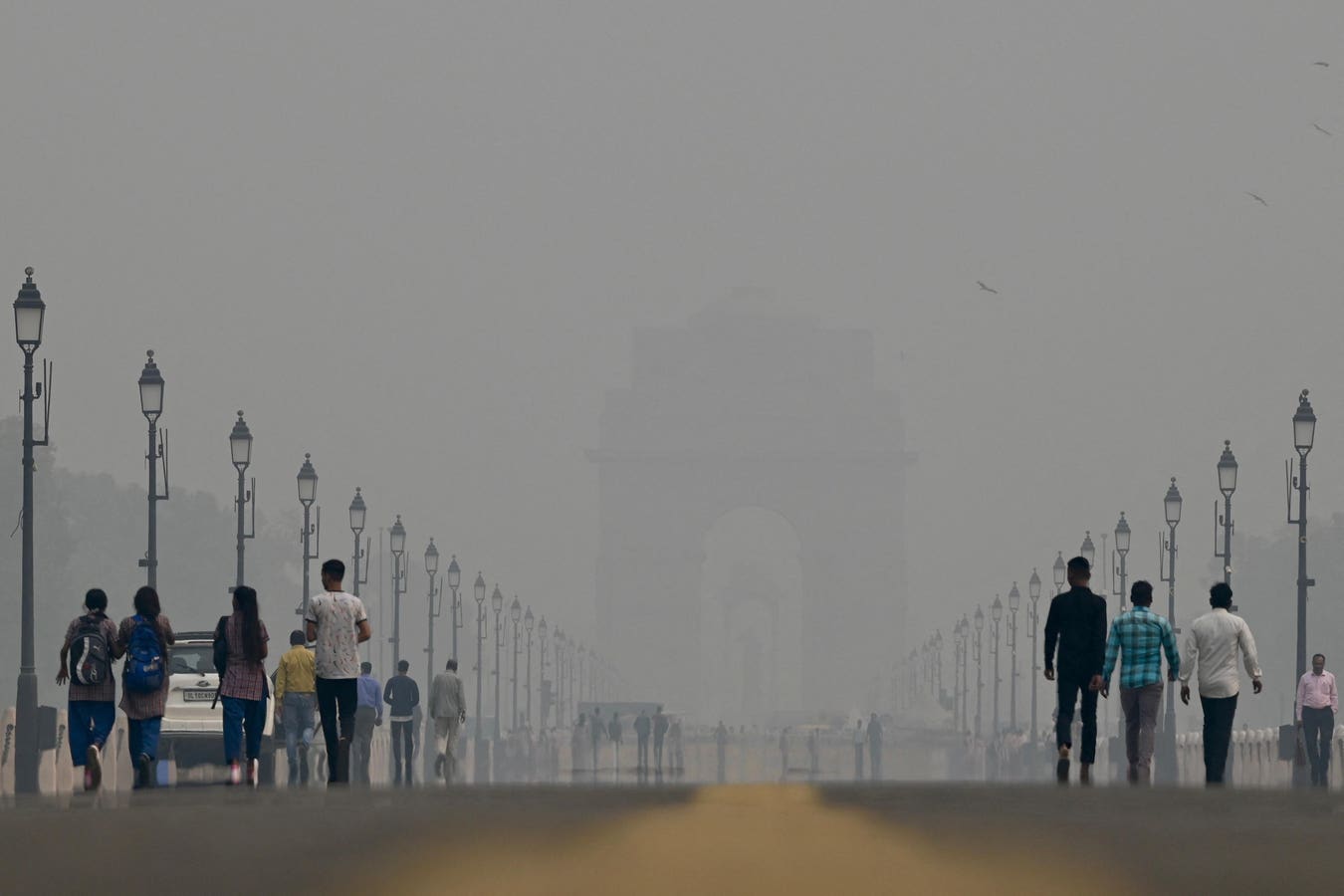
Every October-November, New Delhi, India’s capital, experiences severe air pollution due to stubble burning in neighboring states, particularly Punjab. After harvesting paddy (a monsoon crop), farmers want to prepare their fields for wheat, a winter crop. But this requires removing paddy stubble, which they simply burn. This causes air pollution in Delhi, so severe that schools are closed. By some estimates, this pollution episode reduces Delhi’s gross state product by 1%.
One might wonder why this egregious pollution problem cannot be solved. Surely technology is available in a country that has sent a spaceship to the Moon and is becoming a global hub for high-tech manufacturing. Moreover, India’s global political ambitions should motivate the government to address this issue.
Technology is indeed available to address stubble burning. Haryana, Punjab’s neighboring state, has been largely able to control the burning issue. Moreover, Punjab has laws banning stubble burning and India’s Supreme Court has instructed it to enforce them. The same political party, the Aam Aadmi Party (AAP), rules both Delhi (the pollution recipient) and Punjab (the major pollution creator), and this should create political incentives for enforcing the law.
So, what’s missing? Enforcing the law means inviting the wrath of the powerful constituency, Sikh farmers. Given the history of violent unrest in Punjab, this enforcement action could become a sectarian issue. This is probably why previous governments ruled by other parties chose not to enforce the burning ban either.
What about the citizens of Delhi? Are they not angry with AAP? Apparently not because AAP won the 2022 local elections. This suggests that pollution concerns are not high salience issue in Indian politics.
Could financial incentives stop stubble burning? For example, farmers could be provided subsidized machines (such as the happy seeder machine to cut the straw and distribute it as mulch on the field). In terms of ex situ measures, the government could subsidize the transportation of straw to local power plants to be used as fuel with appropriate pollution safeguards. All these measures require money, and the Punjab government is facing a budgetary crisis. So, it blames the Central government for not providing it with funds. And the Central government with its highly acrimonious relationship with the AAP feels no need to bail them out. Moreover, if Haryana could address the issue on its own, why not Punjab?
Climate Progress or Climate Sluggishness?
The burning ban reflects the spatial mismatch between the costs and the benefits of policy action. Might the same logic explain the global slowdown in climate policy?
The recent United Nations Environmental Programme’s (UNEP) Production Gap Report suggests that major fossil fuel-producing countries will probably extract more than twice the amount of fossil fuels by 2030 than what is consistent with 1.5 degrees Celsius target, and around 70 percent more than the amount consistent with the 2 degrees Celsius target.
The reasons are several, ranging from continued demand for oil (primarily in the transportation sector) to the attractiveness of coal (often a domestically available fuel) for energy security reasons. Without cheap fossil fuels, there is economic unrest, and this creates political problems. So governments want to avoid policies restricting fossil fuels because they impose local costs to create the global public good of climate mitigation.
What then is the way forward?
Many climate technologies are now cost-competitive (sometimes due to subsidies) but their uptake is slower than anticipated. Again, the local-global tension is in play.
Some recent setbacks are due to rising interest rates. Orsted has taken a $4 billion write-off and canceled two large offshore wind projects in New Jersey. NuScale Power, a small modular reactor pioneer, has canceled its Idaho project because rising interest rates and project overruns have increased the project cost to $9.3 billion from $5.3 billion.
Yet, solar and one-shore wind do not seem to be facing similar cost issues. For them, the challenge is political: the pushback from local groups along with regulatory bottlenecks in creating transmission capacity. Rural residents are opposing solar and wind farms–by some estimates, about 24% of US counties have enacted laws in this regard. And proposals for streamlining regulatory approval for new power lines provoke opposition from local groups as well.
The bottom line is that tackling Delhi’s air pollution or addressing slowdown in climate policy requires resolving the tension between local costs and non-local benefits. Technology and policy tools are available to resolve this tension such as increasing subsidies for new technologies, regulatory overhaul, and enforcing the law. But these strategies impose political costs, which policy makers are not willing to incur. Moral appeals about the health impact of pollution or invoking a new UN report about the direness of the climate crisis are not working. Perhaps, an even stronger financial commitment to support climate action is required. But this requires prioritizing climate issues over other pressing social problems. Does the political class have the will to do so?
Read the full article here